Iran War Updates
Iran War Updates: Tehran and Trump Send Mixed Signals Ahead of Potential Talks The ongoing conflict between Iran and the United States has reached a critical stage, with both sides sending mixed and often confusing signals about the future. As the world watches closely, hopes for peace talks are rising—but so are fears of further escalation.
At the center of this uncertainty is Donald Trump, whose recent statements have alternated between optimism about negotiations and warnings of intensified military action. Meanwhile, leaders in Tehran are also sending conflicting messages, leaving the global community unsure about what comes next.
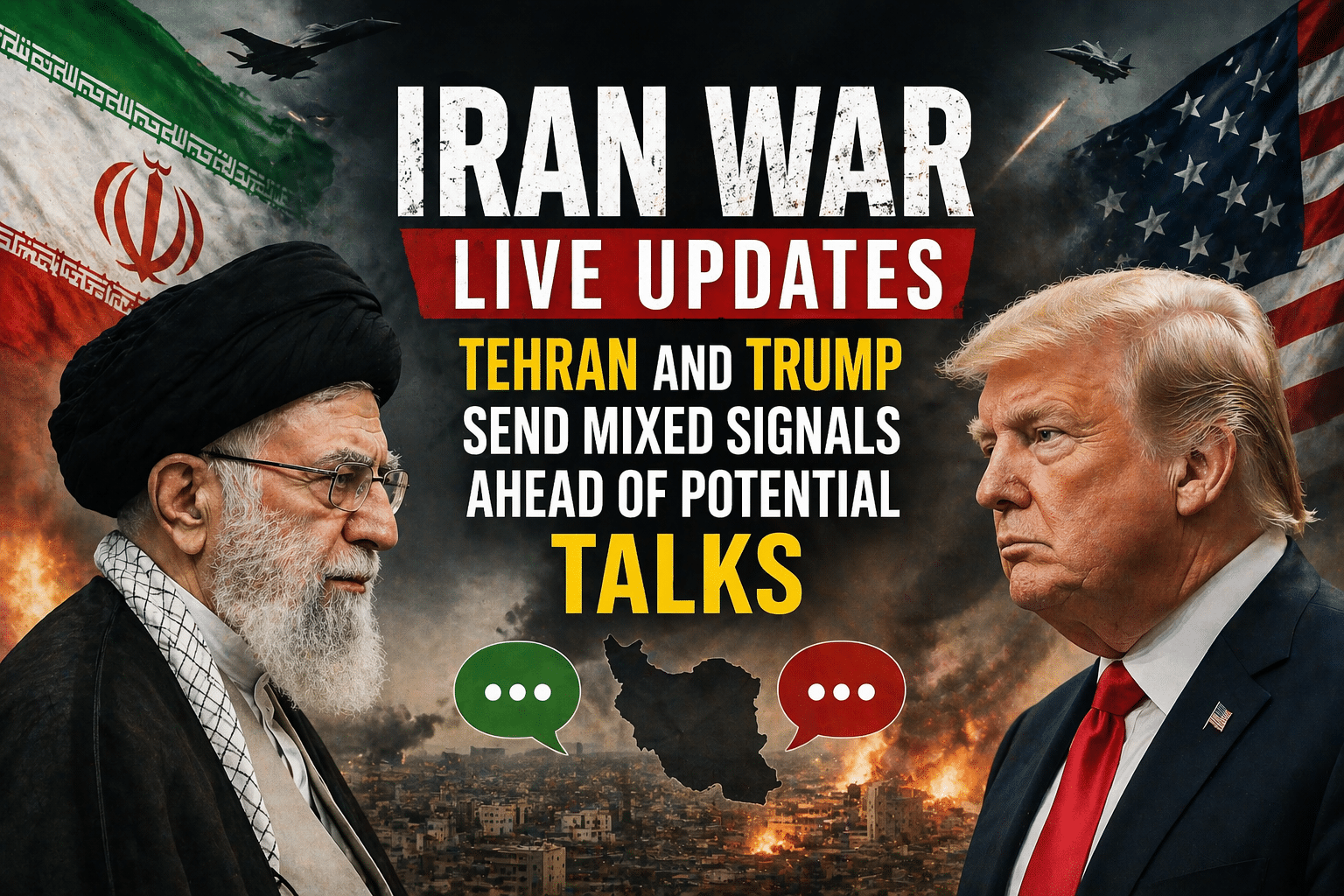
A War with No Clear Direction
The conflict, which began earlier in 2026, has already caused significant damage, both in terms of human lives and economic impact. Key regions like the Strait of Hormuz have become flashpoints, with disruptions affecting global oil supplies.
Recent developments suggest that the situation is becoming even more unpredictable. On one hand, there are preparations for possible peace talks, reportedly in countries like Pakistan. On the other hand, military tensions remain high, with both sides accusing each other of violating ceasefire agreements.
According to recent reports, a temporary ceasefire is nearing its end, and there is no guarantee it will be extended.
Trump’s Mixed Messages
One of the biggest reasons for the confusion is the inconsistent messaging from Donald Trump. In some statements, he has expressed confidence that a deal with Iran is close. In others, he has warned that if negotiations fail, “lots of bombs” could follow.
This shifting tone has left not only global leaders but even his own administration uncertain about the U.S. strategy. Analysts believe this could be a deliberate tactic to pressure Iran—or simply a reflection of a lack of clear direction.
Iran War Updates
Trump has also emphasized that he is not in a hurry to end the war, while simultaneously pushing for negotiations.
This dual approach—diplomacy combined with threats—has made it difficult to predict the next move.
Tehran’s Conflicting Signals
It’s not just Washington sending mixed messages. Tehran’s response has been equally unclear. Iranian officials have, at times, expressed openness to dialogue. But at the same time, they have also rejected claims that talks are even happening.
In earlier instances, Iran even dismissed U.S. claims about ongoing negotiations as “fake news.”
Currently, Iran is reportedly hesitant to join new talks unless certain conditions are met, including changes in U.S. demands.
This cautious stance shows that while diplomacy is possible, it is far from guaranteed.
Iran War Updates
Rising Global Tensions
The impact of this conflict is not limited to the Middle East. The global economy is already feeling the pressure. Oil prices have surged due to disruptions in the Strait of Hormuz, one of the world’s most important shipping routes.
Markets have reacted with volatility, and countries dependent on oil imports are facing increasing uncertainty. Even everyday consumers are feeling the effects, with rising fuel prices becoming a major concern.
Additionally, the humanitarian cost continues to grow. Thousands of people have reportedly lost their lives since the conflict began, highlighting the urgent need for a peaceful resolution.
Will Talks Actually Happen?
The big question now is whether peace talks will actually take place. While there are reports of planned negotiations, Iran has not fully committed to participating. At the same time, the U.S. has not softened its demands.
This situation creates a dangerous imbalance—both sides are talking about diplomacy, but neither seems ready to fully engage.
Experts believe that these mixed signals could be part of a broader strategy. By keeping the other side guessing, both the U.S. and Iran may be trying to gain an advantage in negotiations. However, this approach also increases the risk of misunderstandings and accidental escalation.
What Lies Ahead?
As the ceasefire deadline approaches, the world is entering a crucial period. If talks move forward, there is a chance for de-escalation and stability. But if negotiations fail, the conflict could intensify rapidly.
For now, the situation remains uncertain. Mixed messages from both Washington and Tehran continue to cloud the path forward. The coming days will likely determine whether this conflict moves toward peace—or deeper crisis.
Iran War Updates
Realme 16: Everything You Need to Know Before Buying
Final Thoughts
The Iran war has become a complex and unpredictable situation, shaped by shifting strategies and unclear communication. Both sides appear to be balancing between diplomacy and confrontation, making it difficult to understand their true intentions.
One thing is clear: the stakes are extremely high. The outcome of this conflict will not only affect the Middle East but also have far-reaching consequences for the global economy and international relations.
As the world waits for clarity, one hopes that dialogue will ultimately prevail over conflict.